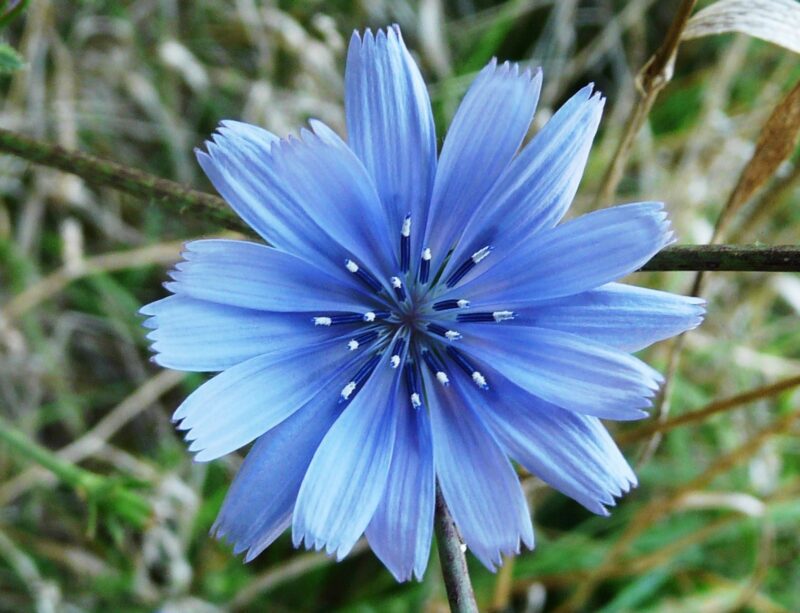
When the skies are dressed in pale blue, and the edges of the roads are brightened with delicate flowers like morning stars, you know that the time of chicory has arrived. Known for their modest beauty and healing virtues, chicory flowers are much more than simple adornments of nature. This perennial plant, with deep roots and azure flowers, has been valued since ancient times for its beneficial effects on the liver, digestion, metabolism, and nervous system.
Benefits: How Chicory Flower Affects the Body
Supports the liver and gallbladder
The flower and root of chicory contain bitter compounds (sesquiterpene lactones, such as lactucopicrin) that stimulate bile secretion, contributing to liver detoxification and more efficient digestion. This choleretic effect is valuable in biliary dyskinesia and bile stagnation.
Helps balance blood sugar levels
Inulin, a soluble fiber present in the flower and root, has a prebiotic effect and helps regulate blood sugar levels. It can be beneficial for individuals with type 2 diabetes or insulin resistance.
Soothes the digestive system
Infusion from the flowers has mild laxative, carminative, and anti-inflammatory effects. It can alleviate bloating, indigestion, and mild gastric discomfort, especially when combined with other plants like mint or marshmallow.
Has detoxifying and anti-inflammatory effects
By stimulating the elimination of toxins and reducing inflammation, chicory can be useful in internal cleansing regimens, also aiding in the purification of skin and blood.
Mild calming effect on the nervous system
Regular consumption of chicory flower tea can reduce irritability and feelings of agitation, due to its mildly sedative compounds.
Usage and Therapeutic Recipes
Chicory Flower Infusion
-
1 tablespoon of dried flowers
-
250 ml boiling water
Let steep for 10 minutes. Drink 2 cups a day, before meals.
Detoxifying Decoction with Chicory and Nettle
-
1 tablespoon of chicory flower
-
1 tablespoon of nettle leaves
-
300 ml water
Boil for 5 minutes, then let it sit covered for another 10 minutes. Drink in the morning for 10-14 days.
Chicory Flower Powder
Obtained by grinding dried flowers. Can be taken 1-2 teaspoons twice a day on an empty stomach, with a little water.
Soothing Bath with Chicory Flowers
Add 3 tablespoons of dried flowers to 1 liter of boiling water, let sit for 15 minutes, and pour into a warm bath. Provides a relaxing effect for the skin and nervous system.
Recent Studies and Research
Chicory: A Review of Nutritional and Pharmacological Properties Phytotherapy Research, 2022
This study shows that inulin and other compounds from chicory support carbohydrate metabolism, have hepatoprotective and anti-inflammatory effects, and are promising for the prevention of metabolic and cardiovascular diseases.
Antioxidant and Anti-inflammatory Properties of Chicory Extracts Journal of Ethnopharmacology, 2021
Extracts from chicory flowers have demonstrated the ability to reduce oxidative stress and inflammatory markers at the cellular level, offering potential in complementary treatments for chronic inflammation.
Contraindications
Pregnancy and breastfeeding Internal consumption of chicory flower is not recommended without medical advice due to mild hormonal effects.
Allergies to plants in the Asteraceae (Compositae) family Individuals allergic to chamomile, ragweed, or marigolds may experience reactions to chicory.
Gallstones The choleretic effect may cause pain or crises, so medical consultation is necessary.
Drug interactions Chicory may interact with hypoglycemic or anticoagulant medications.
Sources:
-
Phytotherapy Research: Chicory: A Review of Nutritional and Pharmacological Properties
-
Journal of Ethnopharmacology: Antioxidant and Anti-inflammatory Properties of Chicory Extracts




