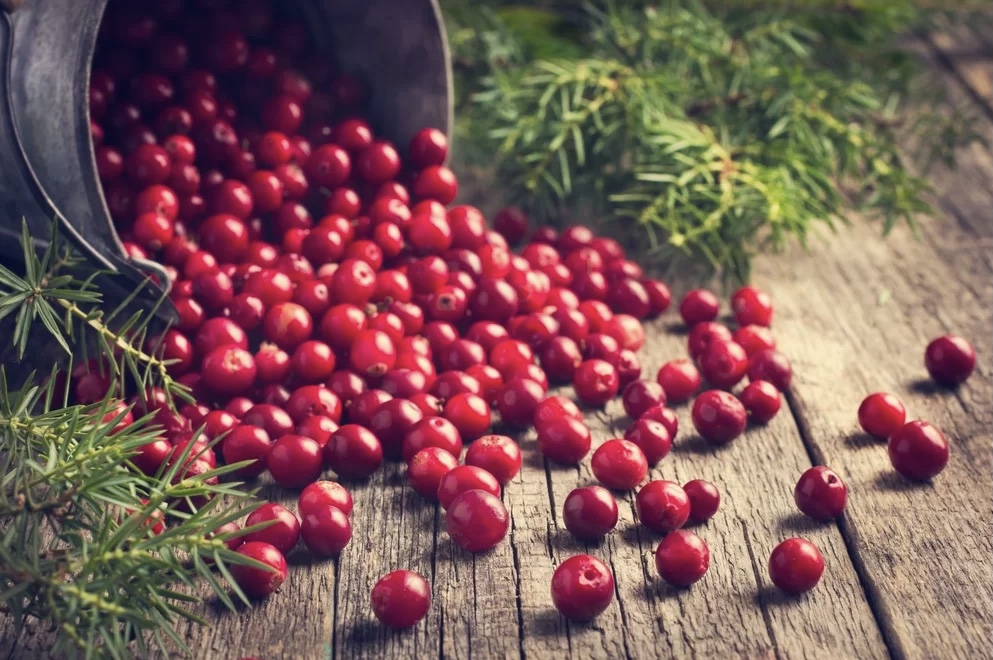
Cranberries are recognized as fruits that contribute significantly to health. Similar to wild berries in terms of shape and color, they also share similar therapeutic properties. They are particularly rich in antioxidants. Researchers have identified dozens of phytonutrients in cranberries that enhance the antioxidant capacity in the bloodstream, helping to combat oxidative stress.
Recent studies have shown that cranberries improve various parameters of metabolic syndrome, a risk factor for diabetes and cardiovascular diseases: they lower blood sugar and triglyceride levels, reduce insulin secretion and insulin resistance, and diminish fat accumulation in the body.
In these cases, cranberries have been used in juice form, about 2 glasses a day, for 8-12 weeks.
Most of us associate the consumption of these fruits with the prevention and treatment of urinary tract infections. Although studies have shown mixed results, traditional medicine recommends the use of cranberry-based preparations for treating urinary infections caused by E. coli.
Some triterpenoids (such as ursolic acid) in cranberries reduce the activity of inflammatory cells. In studies, capsules, extracts, and cranberry juice have been used. Some people are aware of the beneficial effects of cranberries on the kidneys. When consumed frequently, either fresh or dried, they help prevent infections caused by bacteria, viruses, and fungi.
In the past, cranberries were preserved for a long time in a jar with water, covered and sealed at the top. Their antibacterial and antimicrobial effects are due to the content of biohydroquinone. This substance acts against several types of bacteria: E. coli, Staphylococcus aureus, streptococci, Klebsiella pneumoniae, Enterobacter, Pseudomonas aeruginosa.
Not only the fruits but also the leaves of the cranberry can be used for this purpose. The leaves have antibacterial, antifungal, and antiviral properties. A popular remedy against renal-urinary infections is the tincture of cranberry leaves, which can be purchased from health stores or made at home.
Dried cranberry leaves are finely ground using a coffee grinder.
Take 20 tablespoons of the obtained powder and place it in an 800-gram jar.
Pour 60-degree alcohol over them until full.
Seal tightly and shake daily.
Let it macerate for 14 days, then strain into brown bottles.
Dosage
Take 1 tablespoon of tincture, 3 times a day, diluted in 50 ml of water or tea. Administer before meals.
The treatment lasts for 20 days and helps combat and prevent the recurrence of infections by preventing the adhesion of E. coli bacteria to the bladder mucosa.




