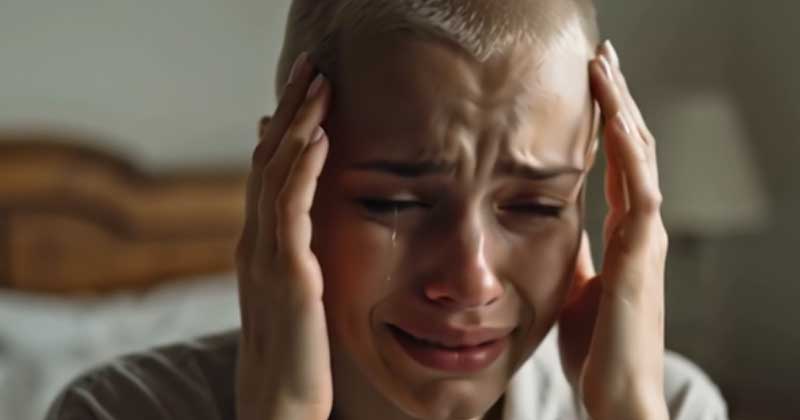
I didn’t cry for more than a few minutes. The tears couldn’t glue my hair back, and a cold determination began to grow within me.
In the mirror, I no longer saw just a wounded woman, but one ready to rise. I had grown up in a rural family where women did not let their dignity be trampled, and my father always told me, “Whoever takes what is yours without your consent does not deserve your peace.”
I started with his things. Every expensive item, every designer piece of clothing, every collection of perfumes he had carefully gathered — I packed them into a bag and took them to the second-hand store in town. The money? I donated it to a shelter for abused women. Let them learn what it means to be deprived of what you love.
Then I left a letter on the kitchen table. It was not a request for forgiveness, nor an explanation. It was a simple note with three lines: “You wanted order? Here is the order. You wanted no hair? You will no longer see the woman who wore it.”
I went to my sister’s, in a village near the mountains. The air there was fresh, people smiled at you on the street, and in the summer evenings, you could hear the song of the crickets and the barking of dogs from the yards. I sat under the old walnut tree in the yard and felt, for the first time that day, that I had truly breathed.
In the following days, the women in the village learned my story. They welcomed me with open arms, bringing me colorful scarves, woven hats, and words of comfort. “It is not your hair that makes you beautiful, but your strength,” an old woman who had gone through two wars and raised her four children alone told me.
Slowly, I began to see myself differently. My bald head was no longer a sign of loss, but of a new beginning. One morning, I went out into the garden without covering my head. The sun caressed my skin, and the wind brought the scent of freshly cut hay. I no longer felt vulnerable, but free.
While he searched for me with calls and messages full of apologies, I was busy rediscovering who I am. I didn’t need revenge in the classic sense — I had already taken my power back.
Two weeks after I left, I sent him a single photograph. Me, smiling widely, with a crown of wildflowers on my head, standing next to my sister. I wrote nothing. There was no need. The image said it all: I was no longer the woman who let him determine her worth.
And then I understood: hair grows back, but dignity, once lost, must be earned at the cost of all your strength. I had earned mine back.
And that, for me, was the greatest victory.
This work is inspired by real events and people, but has been fictionalized for creative purposes. Names, characters, and details have been changed to protect privacy and enhance the narrative. Any resemblance to real persons, living or dead, or actual events is purely coincidental and not intended by the author.
The author and publisher do not assume responsibility for the accuracy of events or the portrayal of characters and are not liable for any misinterpretations. This story is provided “as is,” and any opinions expressed belong to the characters and do not reflect the views of the author or publisher.


