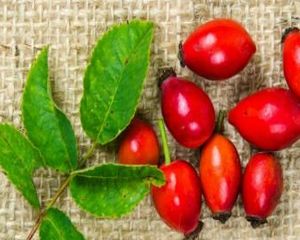
Related to the rose, the rosehip belongs to the genus Rosa, family Rosaceae, and out of its 200 species, 51 can be found in Romania.
The most widespread species in Romania is the wild Rosa canina L. Rosehips have numerous popular names, such as: cocadar, calcaderiu, cecadar, cascadin, ciucuri de mrcine, mrcinele cioarei, mcie, mrcinele coofanei, rsur, rug de mce, rug slbatic, rugul-vacii, ruja, rujita, scoabe, scochin, scoru nemesc, ipic, suie, trandafir de cmp, trandafir slbatic, trandafir de pdure, trandafir cinesc, tuf de rug, zgorghin.
Rosehips are rich in vitamin C (having a content 50 times richer than lemons), and in the case of mountain rosehips, especially those harvested from over 800m altitude, the vitamin C content is even 10 times higher. Rosehip fruits also contain provitamin A, vitamins A, B1, B2, B3, B5, E, P, PP, K, sugars, pectins, tannins, magnesium, calcium, iron, manganese, phosphorus, potassium, selenium, sulfur, zinc, antioxidants, malic acid, citric acid, ascorbic acid, dehydroascorbic acid, nicotinic acid, polyphenols, anthocyanins, bioflavonoids, pectin, citrates, terpenoids, glycosidic compounds, beta-sitosterol glycosides, cellulose, proteins, catechins (natural antioxidants that protect the heart from specific diseases), pectin (protects the cardiac muscle), lecithins, and terpenic compounds such as betulin, lycopene (an isomer of carotene), a pigment that gives them their reddish-orange color.
The petals of the flowers contain essential oil, while the seeds contain vitamin F and large amounts of tocopherol (vitamin E), essential fatty acids – linoleic acid, linolenic acid, and arachidonic acid.
Thus, rosehips are strongly mineralizing, toning, and vitaminizing, and their richness in antioxidant substances makes them particularly effective in stimulating immunity, ensuring proper cardiovascular function, strengthening peripheral circulation, combating fatigue, regulating calcium, stabilizing blood sugar, regulating metabolism, maintaining the health of blood vessels, stimulating the functions of cells throughout the body, combating insomnia, and nervous disorders.
A rosehip cure for immune stimulation and metabolism regulation lasts 5 days. You can choose one of the following options:
The mixture of rosehips with honey is obtained from two parts, the pulp of well-cleaned rosehips and one part honey. It is administered in doses of 3-4 tablespoons daily.
You can use rosehip powder (available in health food stores) which can be added to salads, yogurt, milk, or infusions (4 heaping tablespoons of powder per day);
You can also use rosehips in the form of a decoction. This is prepared as follows: 2 tablespoons of crushed rosehips are placed in 500 ml of hot water and boiled for 10 minutes. Drink 2 cups a day;
Maceration is also helpful, prepared as follows: 100g of crushed rosehips are macerated in one liter of cold water for 12 hours. Then add 100g of honey, mix to homogenize, strain, and store in the refrigerator. Drink 2-3 glasses a day;
NOTE: To enhance the effects of the fruits, you can combine them with honey. It is preferable to always use organic or bio honey from a known source.




