Joint pain is a common issue, especially as we age or during the colder months of the year. Before the era of modern medications, our grandparents relied on natural remedies passed down through generations to alleviate these discomforts. Here is a selection of the most effective home remedies that can help reduce joint pain.
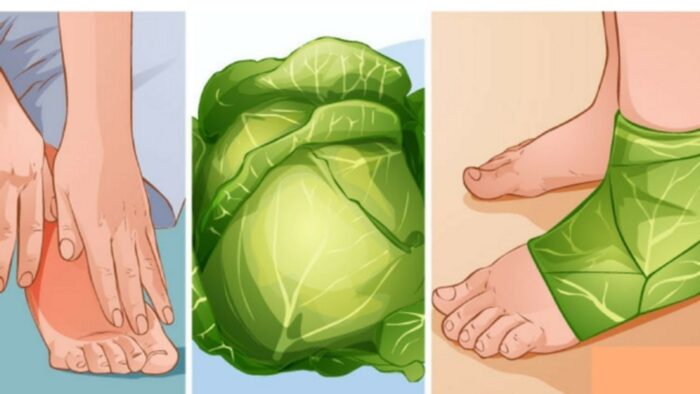
1. Cabbage Leaf Compresses
Cabbage leaves are known for their anti-inflammatory and soothing properties.
How to use:
Choose a few fresh cabbage leaves and gently crush them with a rolling pin to release the juice.
Apply the leaves directly to the painful joint and cover with plastic wrap, then with a towel.
Let the compress act for 2-3 hours or overnight.
2. Lard and Comfrey Ointment
Comfrey is a plant renowned for its ability to reduce inflammation and pain, while lard helps absorb the active substances.
How to prepare:
Mix 100 g of unsalted lard with 2-3 tablespoons of ground comfrey root.
Heat the mixture over low heat for 10-15 minutes, then strain and let it cool.
Massage the painful joints with the obtained ointment, preferably in the evening.
3. Grated Potato Poultices
Raw potato has anti-inflammatory effects and can reduce swelling in the joints.
How to apply:
Grate a raw potato and wrap it in a clean cloth.
Apply the cloth to the affected area and secure it with a bandage.
Let it act for 30 minutes to an hour.
4. Warm Baths with Epsom Salt
Epsom salt is rich in magnesium, which helps relax muscles and reduce inflammation.
How to do it:
Add 1-2 cups of Epsom salt to a basin of warm water.
Soak the affected joint in the water for 15-20 minutes.
Repeat the treatment 2-3 times a week.
5. Apple Cider Vinegar Compresses
Apple cider vinegar has anti-inflammatory properties and stimulates blood circulation.
How to use:
Mix 3 tablespoons of apple cider vinegar with a cup of warm water.
Soak a clean cloth in the mixture and apply it to the joint.
Cover with a warm towel and let the compress act for 30-40 minutes.
6. Castor Oil Massage
Castor oil has anti-inflammatory properties due to its content of ricinoleic acid.
How to apply:
Gently heat 2-3 tablespoons of castor oil.
Massage the painful joint with circular motions for 10-15 minutes.
For a stronger effect, wrap the area with a warm towel after the massage.
7. Anti-inflammatory Teas (Nettle, Ginger, and Turmeric)
Nettle, ginger, and turmeric have anti-inflammatory effects and can help reduce joint pain.
How to prepare:
Boil 1 tablespoon of nettle leaves or 1 tablespoon of ginger/turmeric in 250 ml of water.
Let the tea infuse for 10 minutes, strain, and consume.
Drink 1-2 cups a day for a continuous effect.
8. Chili Pepper Ointment
Capsaicin in chili peppers helps reduce pain by blocking nerve signals.
How to prepare:
Mix 1 tablespoon of chili powder with 2 tablespoons of olive oil.
Apply the mixture to the painful area, but be careful not to use it on sensitive or irritated skin.
Let it act for a few minutes, then rinse with warm water.
9. Poplar Bud Tincture
Poplar buds contain substances with anti-inflammatory and soothing effects.
How to use:
Massage the painful joints with poplar bud tincture 1-2 times a day.
Alternatively, you can add a few drops of tincture to a neutral cream and use it as an ointment.
These home remedies are easy to prepare and accessible, but for persistent or severe pain, it is recommended to consult a specialist. These traditional solutions can complement modern treatments, providing natural relief for joint pain.




