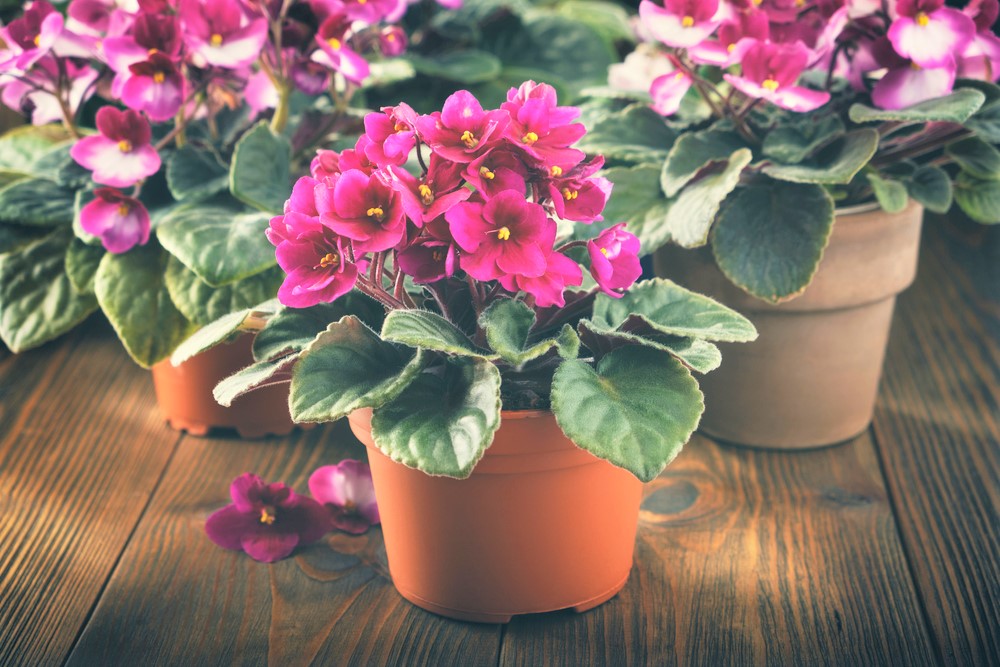
Violets come in a wide range of colors. They are usually found in intense shades, but there are also varieties in more delicate pastels.
Although many of the over 500 species of violets are perennials, these hardy plants can also be treated as fragrant annuals in the fall. Because violets tolerate cold temperatures, they can be among the first flowering plants to be placed in gardens or pots. Once planted, violets will thrive on their own for many years.
About violets: where and how to plant them
Plant violets along the edges of the garden or along pathways. They are good flowers to plant alongside other plants that bloom in spring, as they retain their color even after other, more ephemeral flowers have wilted. They are reliable and colorful flowers for spring planters and hanging pots. If you want the flowers to return each year, make sure the variety of violets you choose is hardy or opt to plant in containers that you can move as needed.
You can plant violets in early spring or fall. Violet seedlings are available from early spring to late summer. If you are planting a seedling, dig a hole slightly larger than the root bulb and space the plants about 15-30 cm apart (depending on the specifications of the variety). Plant trailing types and those that spread about 25-30 cm apart.
Light: While violets can thrive in different light conditions, most will grow best in direct sunlight or partial shade. Some species that tolerate more shade can be planted in areas with complete shade. Otherwise, most varieties will benefit from spots that receive afternoon shade to keep the plants cool during the warm summer months. Even so, this may not be enough, as violets are cool-season plants. For this reason, they are often treated as annuals and removed when summer begins.
Soil and water: Many species of violets grow best in rich, organic, forest-type soils. Ensure that violets have consistent moisture, especially during warm months, but do not overwater them. If left in standing water, violets can develop root rot or moldy leaves.
Temperature and humidity: While violets tolerate cold, they are not resistant to drought or heat. If it gets hot, add mulch to keep them cool.
Fertilization: When planting, add a slow-release fertilizer to the soil. Fertilize again in spring and at the end of summer or early fall to extend the blooming period.
Pruning: Remove dead flowers to promote the growth of new ones. If the plants start to look too large, cut them back to a height of 7-8 cm to rejuvenate them and encourage more flowers.
Planting and repotting violets: Both trailing types and bushy forms are suitable for pots. When growing annual violets in containers, choose a well-draining potting mix. Using a slow-release fertilizer will help encourage continuous blooming. Plant them at least 15 cm apart in pots that are at least 10 cm deep to provide enough space for spreading. Keep them well-hydrated (you may need to water them daily as the weather warms) and fertilize lightly each month. Annual plants will start to wilt in warm summer temperatures, so there will be no need to repot them.
Pests and problems: Provide violets with enough sunlight and space for air circulation, and ensure they are not sitting in standing water. Garden pests, such as spider mites and aphids, can be treated with a spray of water from the garden hose, and if this does not work, try using insecticide. If the leaves of your violet are drooping, it may be too crowded or not receiving enough water.
Propagation: If you are growing violets from seeds, plan to sow them about 3 months before the time you want them to bloom (or 8 to 12 weeks before the last frost).
Prepare a seedling tray or a small pot with well-draining flower soil and moisten the soil well.
Spread the seeds in a thin layer on the surface of the soil (you can thin them out once they start to germinate).
Cover the seeds completely and lightly press the soil.
Keep the soil evenly moist, and the seedlings should appear in about 2 weeks. Once they appear, keep them in a bright location.
After a week of acclimatization, the seedlings can be planted in the soil in spring or fall.
Violet seeds can be sown directly in the soil at the end of summer or early fall.
Place the seeds evenly in a thin layer, then cover them with a layer of soil about 0.5 cm thick.
Press the soil to secure the seeds, then water them well, being careful not to disturb them.
Keep the soil evenly moist.
Depending on the climate and soil conditions, seedlings should appear in 1 to 2 weeks.
Propagation from cuttings:
Cut cuttings of 5-7 cm below a node.
Remove the leaves from the lower part of the stem and place each cutting in a pot with compost soil, up to the lowest leaf on the stem.
If planting multiple cuttings in one pot, ensure they do not touch.
Once they develop roots, transplant them into individual pots.
General tips for caring for this flower:
A mix of peat-based soil or garden soil rich in organic matter is the ideal environment for violets and pansies. Adding peat moss to garden soil will help create a slightly more acidic environment, as violets prefer slightly acidic soils.
Water frequently, but allow the soil to dry between waterings. Violets can tolerate short periods of drought, but frequent watering will help them reach their maximum growth potential.
The ideal temperatures for growing violets in early spring are between 4 and 21 degrees Celsius. They thrive in cooler climates. Mulch and water will reduce stress caused by high temperatures.
With proper care, violets can bloom all summer and will usually bloom again in the fall. They can be removed from the soil and replaced with other flowers during the summer, then replanted in the fall when the temperature becomes cooler.
You can also encourage blooming and extend the blooming season by removing wilted flowers at the base of the stem. To help them recover, cut back overly tall or overgrown plants to a height of 7-10 cm.




