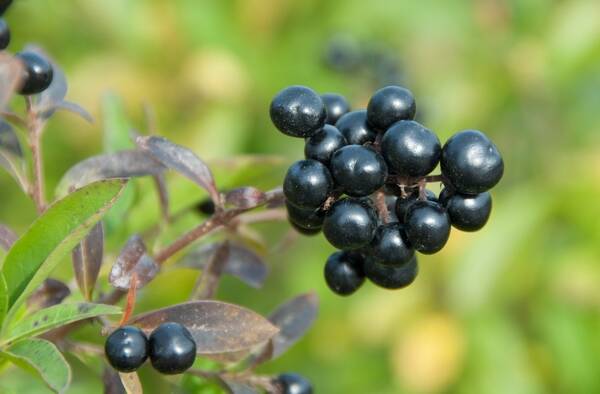
Buckthorn is a shrub that we are not very familiar with. Most likely, we have heard about its laxative effects, but these are not the only benefits that this shrub brings to the human body.
Plant Description. Where to Find It
Buckthorn (Frangula alnus) is a shrub that thrives in thickets and wet, wooded areas. It is found throughout most of Europe and is not very difficult to recognize.
It is a vertically growing shrub that can reach heights of 3-5 meters. Its bark is gray-brown and is covered with white spots that stand out slightly.
Buckthorn flowers are a pale green shade and can be admired in May and June. The fruits of buckthorn are red but darken first to brown and then to black as they ripen and overripe. Buckthorn belongs to the Rhamnaceae family.
Benefits
Buckthorn bark is rich in anthraquinone glycosides, as well as bitter principles, mucilages, saponins, sitosterol, flavonoids, and peptide alkaloids and resins.
These active substances make buckthorn a good natural laxative with purgative, choleretic, and antiviral effects.
It is important to know that the laxative effect is slow, occurring 8-10 hours after administration, regardless of the dose. Of course, smaller doses produce milder effects, while larger doses of buckthorn provide an intense effect, as is normal. You should also know that buckthorn has a relaxing effect on the intestinal muscles, while simultaneously increasing intestinal peristalsis.
Buckthorn is also used to eliminate intestinal worms and to increase bile secretion from the liver, contributing to strengthening collagen fibers in the skin and tissues in diseased arteries.
A decoction of buckthorn applied to the gums can alleviate and even heal gingivitis, and if applied to the scalp, it eliminates lice.
There are studies suggesting that buckthorn extract may inhibit tumor development.
Therapeutic Indications
Buckthorn Tea
Internally, the combined decoction is recommended for alleviating constipation, whether chronic or acute. It is administered as half a cup of decoction per day, and in more resistant cases, even one cup per day. In cases of chronic constipation resistant to treatment, buckthorn powder is used in combination with coriander seeds, which help reduce gas or intestinal colic, as well as aerial parts of ground elder.
The combined decoction is also administered in diseases associated with constipation, such as skin conditions, including acne, allergic eczema, psoriasis, or hard-to-heal infections. In these cases, the combined decoction works very well with the macerate of three spotted brothers.
It is important that during the treatment, the diet is based more on vegetables, fruits, and greens, and less on meat, which, where there are no other indications, is better to eliminate from the diet during this treatment. The effects of the treatment are visible shortly after its initiation.
The combined decoction can be used to alleviate rheumatism. It will accelerate the elimination of toxins from the tissues, combat constipation if present, and promote better metabolism of anti-rheumatic remedies.
In cases of weight gain and obesity, the combined decoction can be used, but for a period not exceeding 2-3 weeks. The treatment can be resumed after a one-week break. In this case, the product can be combined with dandelion, artichoke, and elderflower, all three recommended in the fight against excess weight.
Buckthorn powder, combined with wormwood and pyrethrum, is recommended for eliminating intestinal worms and treating giardiasis. The three powders are mixed in equal proportions and administered one teaspoon three times a day. The treatment will last for at least one month, and in giardiasis, the treatment will be for three weeks, with two weeks off until complete recovery.
People with lazy bile can consume buckthorn bark powder. This is administered as half a teaspoon, combined with half a teaspoon of artichoke.
Small doses of buckthorn powder, half a teaspoon taken twice a day, provide benefits for the skin, eliminating the congested appearance.
The powder can also be used to alleviate varicose veins and hemorrhoids. It is especially effective for people with a sedentary lifestyle, obese individuals, and when hemorrhoids, for example, are secondary to constipation. The powder can be combined with sage and horsetail, and the treatments are long-term and should be supported by a diet rich in fruits and vegetables.
The powder is also useful for headaches and migraines accompanied by constipation, as well as an adjunct in oncological conditions accompanied by constipation, as well as in autoimmune diseases, hepatitis, and in liver recovery after hepatitis.
Buckthorn. Preparation and Administration
Buckthorn Bark
The powder is obtained by finely grinding the buckthorn bark. It is administered as half a teaspoon or even a heaping teaspoon. The powder should be kept under the tongue for 15 minutes before swallowing with a little water.
Buckthorn can be combined in equal proportions with fennel, for effects against abdominal bloating, and with marshmallow, to avoid irritating the colon. The powder will be administered twice a day on an empty stomach.
The combined decoction is made with one teaspoon of buckthorn powder, one teaspoon of comfrey root powder, and a pinch of clove powder. All these will be left to macerate overnight in a cup of water.
In the morning, the product will be filtered, and the remaining plant after filtering will be boiled for 10 minutes, then cooled and filtered again. The two extracts are mixed and administered up to 2 cups per day.
Buckthorn. Contraindications and Side Effects
Buckthorn can interact with a number of medications, and for this reason, individuals with diagnosed illnesses should seek medical advice before using this extract.
Buckthorn should be avoided by pregnant women and those who are breastfeeding. Children under 15 years old should not use buckthorn for treating constipation.
Products based on buckthorn bark should not be administered for more than 7 days a month without medical advice.
Individuals suffering from irritable bowel syndrome or diarrhea are contraindicated from using buckthorn. An overdose of buckthorn can cause seizures.
Toxicity. Fresh bark is toxic and should not be used.




